Composite floor deck, Betopan and Boardex: where each is used
Deck that removes formwork stripping, and cement-bonded boards: what each is for and what to watch.
Arslan Demir
These three materials do different jobs but turn up in the same place: the floors and walls of a steel-framed building. All three work on dry-system logic, reducing wet trades.
Composite floor deck — permanent formwork
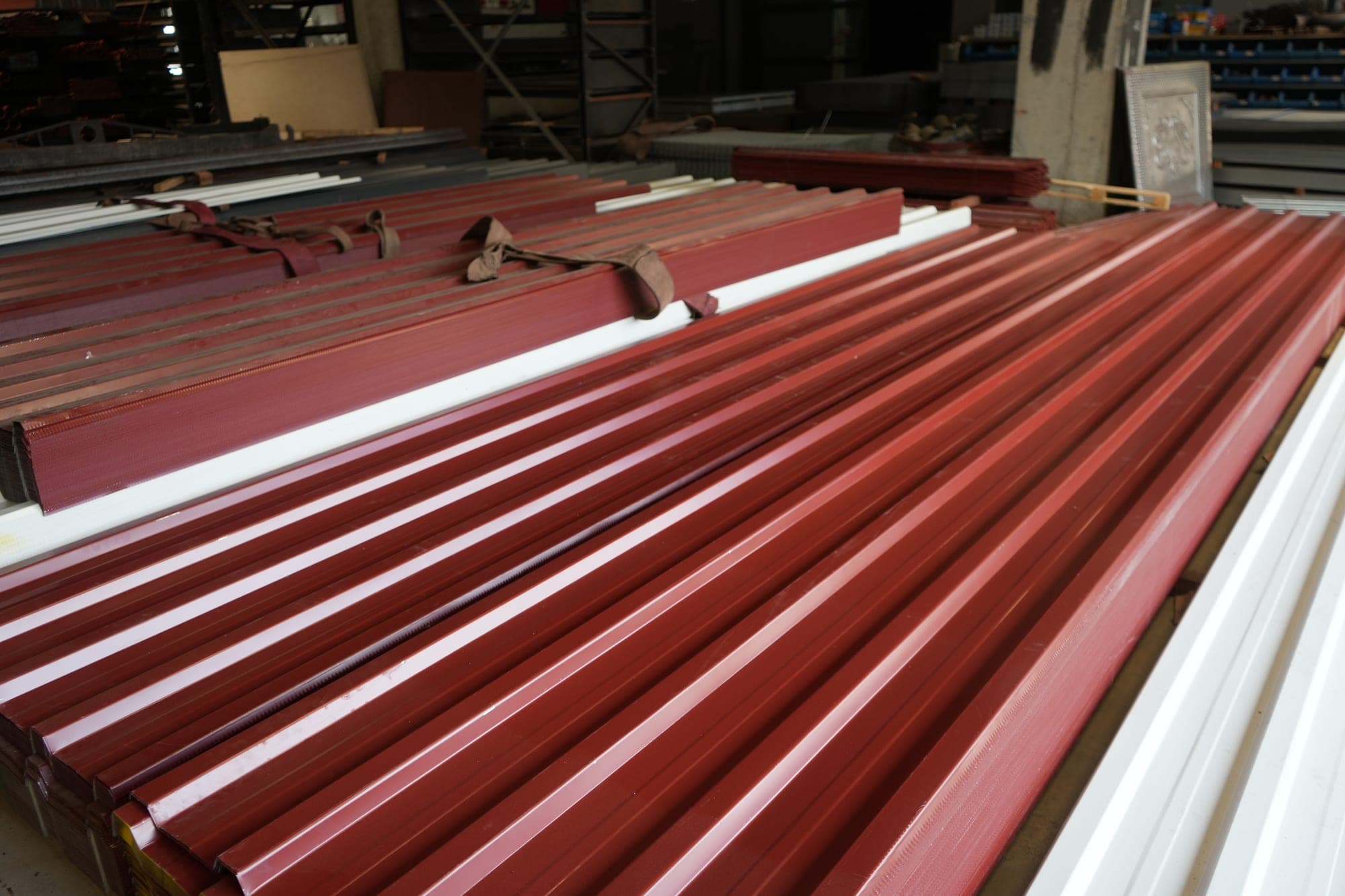
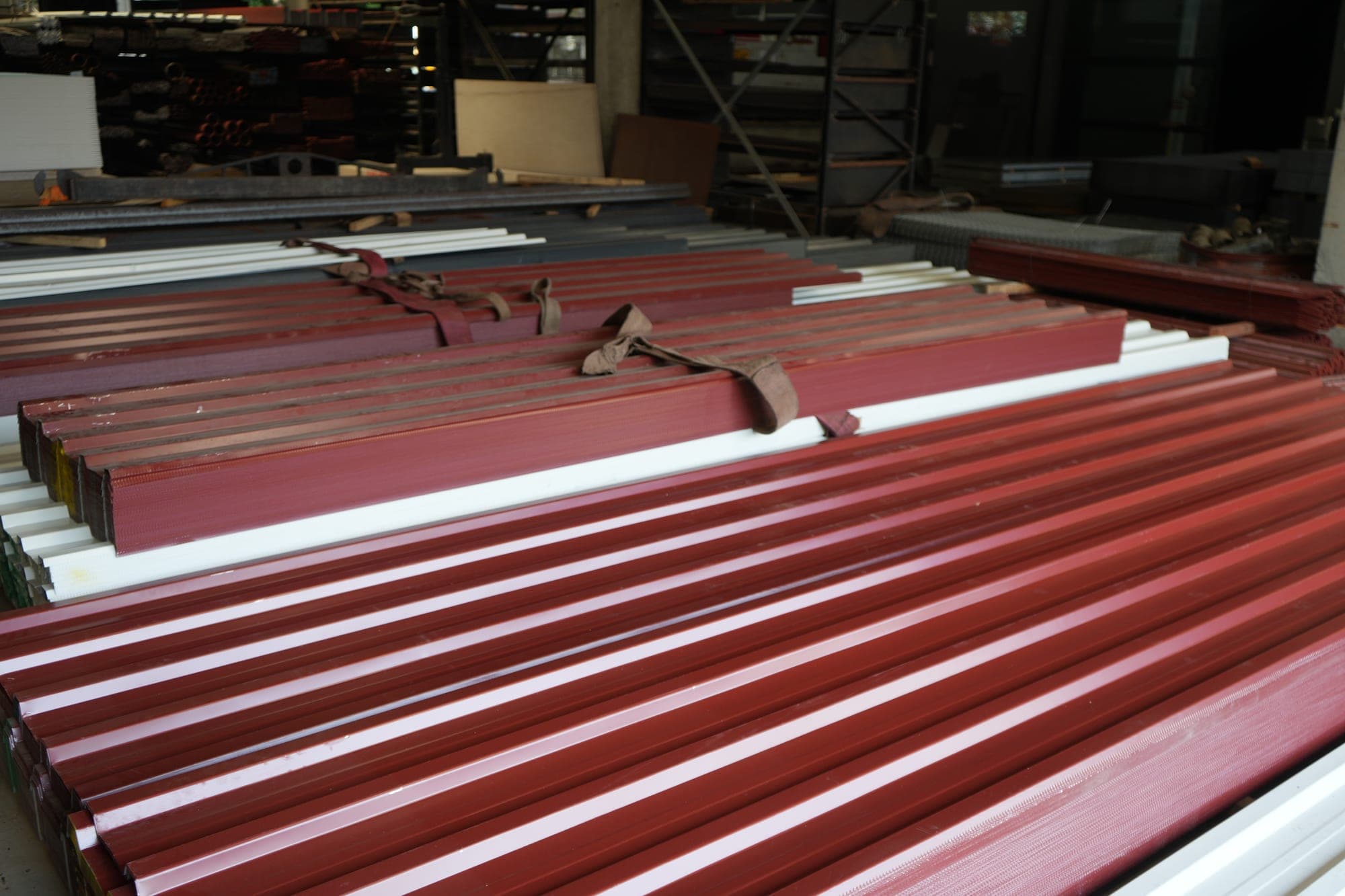
Galvanised trapezoidal sheet that acts as formwork in a reinforced concrete slab. It is not stripped after the pour; it stays in the structure and becomes part of the floor. Sheet thickness is typically 0.80 – 1.20 mm and it arrives cut to length.
The gain is that formwork stripping disappears entirely: erecting and dismantling falsework, cleaning forms and waiting all drop off the list. In multi-storey steel-framed buildings this is one of the most visible savings in the programme.
Cement-bonded particle board
Made by pressing cement with wood particles. Usually 1250 × 2500 mm, 8 – 20 mm thick. Used in non-loadbearing walls, floor build-ups and facades. What separates it from timber board is the moisture and fire behaviour that the cement content brings.
Fibre-cement flat board
Fibre-reinforced cement board with a flat face. 1250 × 2500 mm, 6 – 20 mm thick. Preferred in wet areas, facades and partitions; the flat face suits finishes and paint.
Which, where
Permanent formwork in a concrete slab: composite deck. Dry walls, floor build-ups, external cladding: cement-bonded particle board. Wet areas and partitions needing a smooth face: fibre-cement board.
Composite deck is not a covering but part of the structure; its thickness and rib depth come from the calculation.
When ordering
For deck we need the span and slab thickness; for boards, thickness and quantity. Deck is delivered cut to length; boards come in standard sizes.
All three are supplied from our Alanya warehouse. Send the sizes and quantity and we confirm stock and lead time the same day.